Online Ecomarket toWasteLess. New ways to live plastic-free life

Scope of Work

User Research, UI Design, Wireframing, Usability Testing, Design Systems

User Research, UI Design, Wireframing, Usability Testing, Design Systems

Type of Project

E-commerce, Web and Mobile

E-commerce, Web and Mobile

My Role

Product Designer

Product Designer

Timeline

8 weeks

8 weeks

Overview

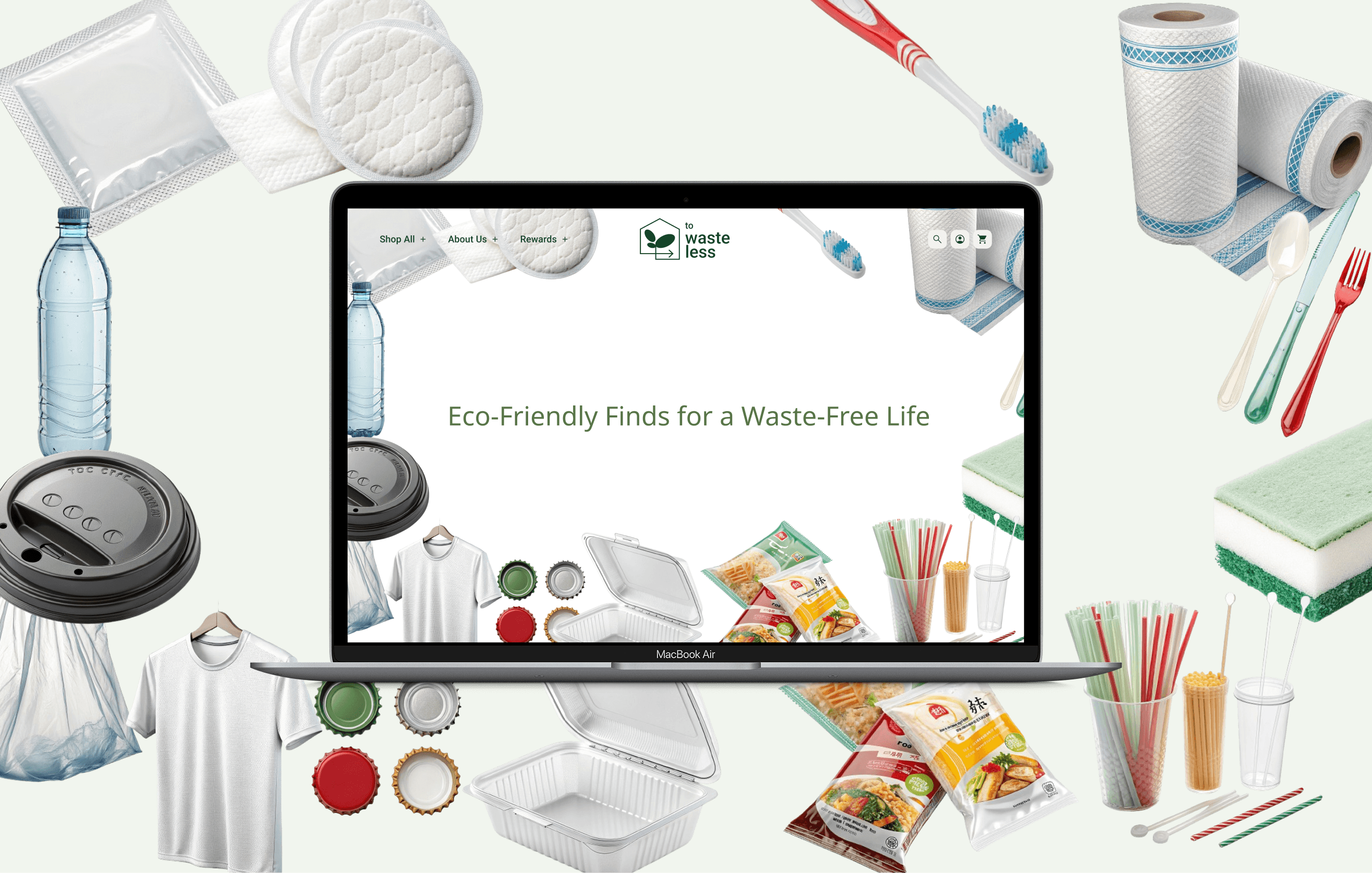
To Waste Less, an eco-conscious e-commerce platform aimed at encouraging more sustainable shopping habits. The goal was to redesign the website to create a clean, trust-driven experience that helps users easily discover and purchase plastic-free and environmentally friendly products. By addressing key pain points such as low visual clarity, lack of trust in eco-claims, and poor product differentiation, the platform emphasizes minimal design, clear hierarchy, and transparent product information. Usability testing helped refine navigation and product presentation, resulting in improved scanability, accessibility, and user confidence during the shopping journey

To Waste Less, an eco-conscious e-commerce platform aimed at encouraging more sustainable shopping habits. The goal was to redesign the website to create a clean, trust-driven experience that helps users easily discover and purchase plastic-free and environmentally friendly products. By addressing key pain points such as low visual clarity, lack of trust in eco-claims, and poor product differentiation, the platform emphasizes minimal design, clear hierarchy, and transparent product information. Usability testing helped refine navigation and product presentation, resulting in improved scanability, accessibility, and user confidence during the shopping journey

Goal

Transforming an online eco-shop into a lifestyle-driven brand for the eco-conscious community.

  • Convenient product search and comparison by categories

  • Product photos and customer reviews are available

  • User account with purchase history, favorite items, and personalized discounts

  • Product payment and delivery options

Transforming an online eco-shop into a lifestyle-driven brand for the eco-conscious community.

  • Convenient product search and comparison by categories

  • Product photos and customer reviews are available

  • User account with purchase history, favorite items, and personalized discounts

  • Product payment and delivery options

Problems

  • Users may distrust eco claims and struggle to verify genuine sustainability

  • Users may doubt the cleaning power of eco-friendly detergents

  • High prices can deter users from choosing sustainable options

  • Habit and brand loyalty keep users from switching to greener products

  • Users may distrust eco claims and struggle to verify genuine sustainability

  • Users may doubt the cleaning power of eco-friendly detergents

  • High prices can deter users from choosing sustainable options

  • Habit and brand loyalty keep users from switching to greener products

Primary User Research

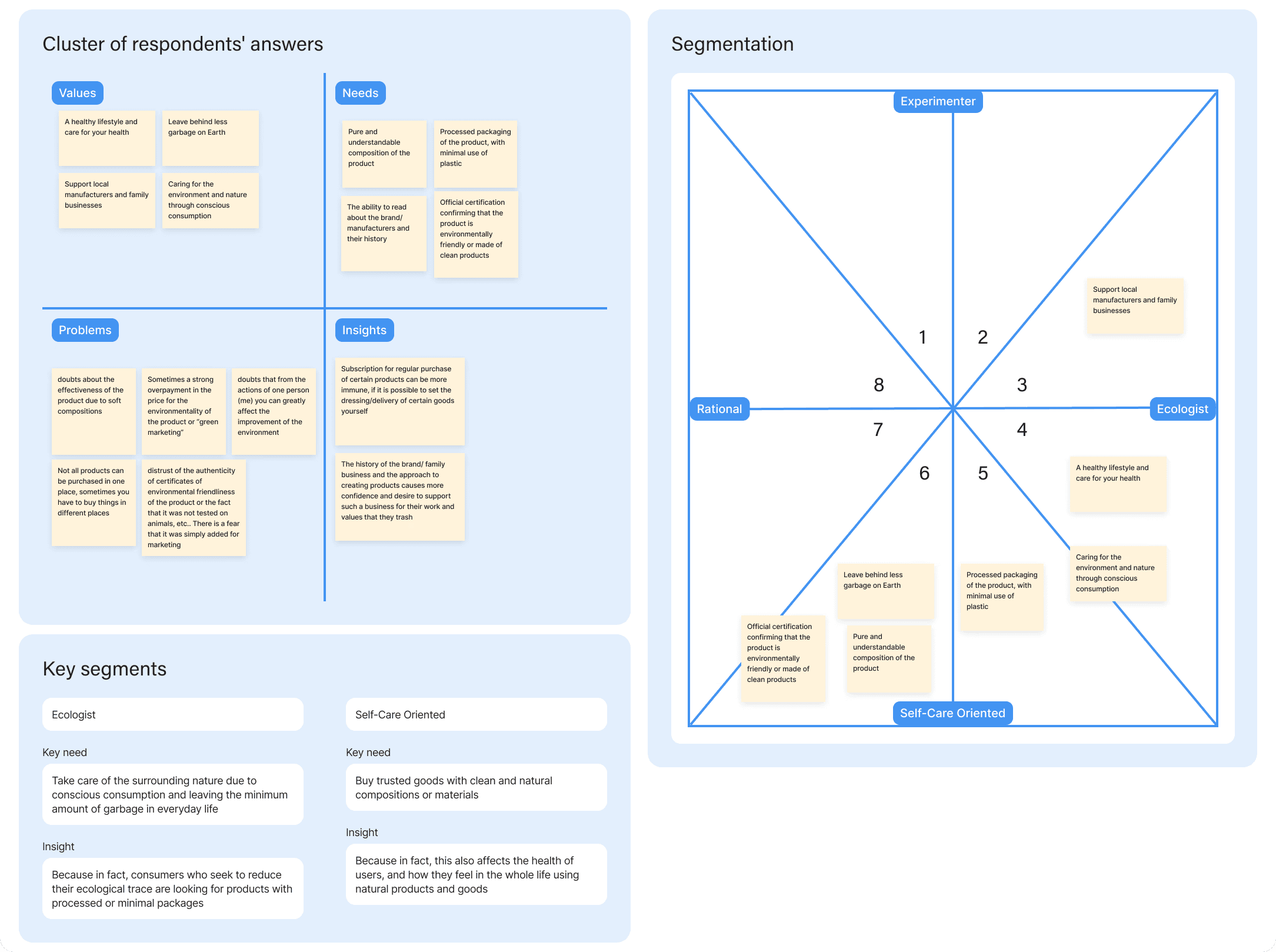
I researched environmentally conscious users to understand what drives their purchasing decisions, uncovering a strong preference for sustainable, non-toxic products driven by health concerns and lifestyle values. These insights informed design decisions that emphasized transparency, clarity, and product trust, aligning the shopping experience with users’ wellness-focused and eco-friendly priorities
I researched environmentally conscious users to understand what drives their purchasing decisions, uncovering a strong preference for sustainable, non-toxic products driven by health concerns and lifestyle values. These insights informed design decisions that emphasized transparency, clarity, and product trust, aligning the shopping experience with users’ wellness-focused and eco-friendly priorities
Wireframe Design

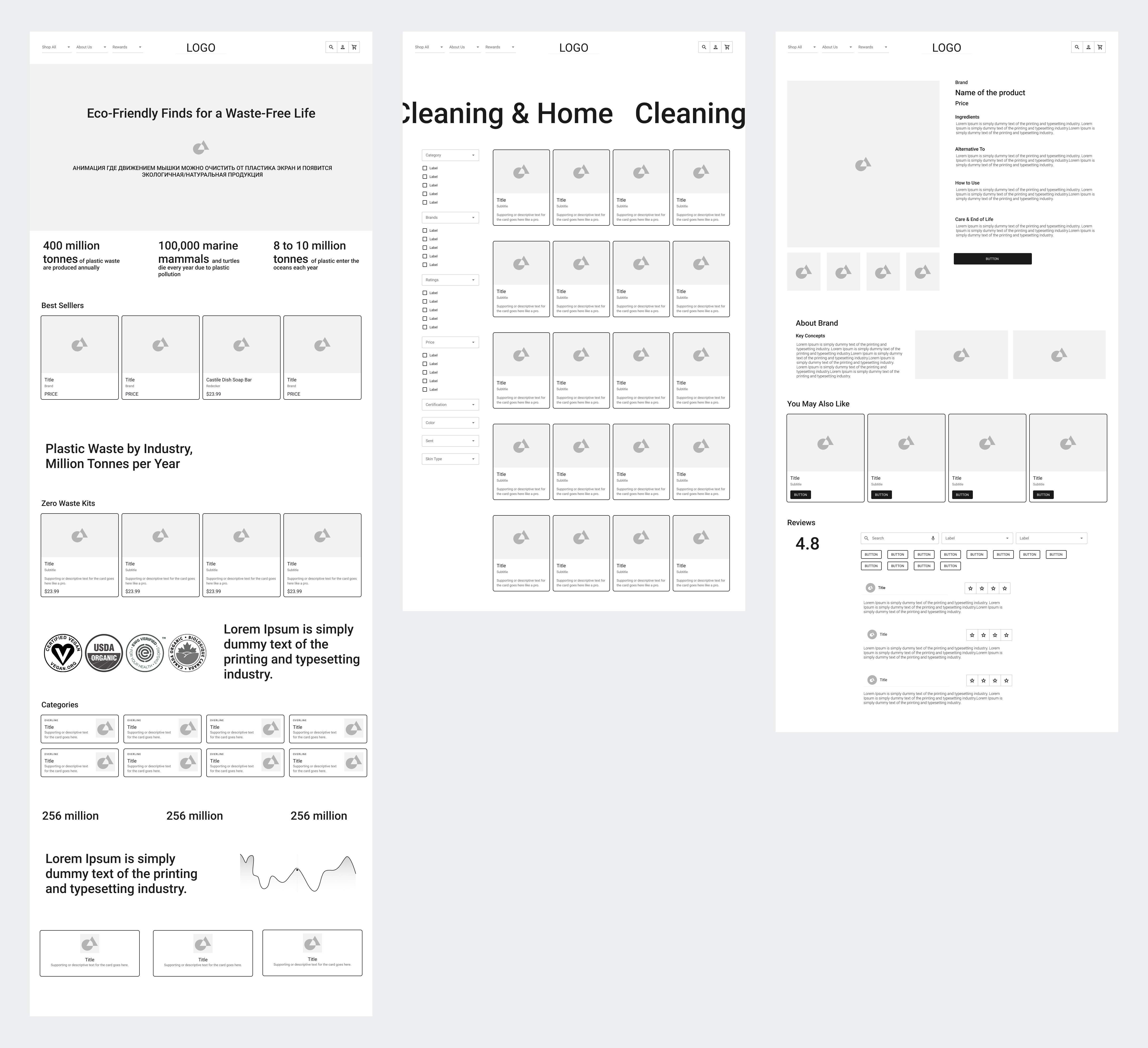
Building on insights from user research, I translated early ideas into low fidelity wireframes that defined the core shopping flow from product discovery and category browsing to product details and checkout. I then tested these low fidelity designs with users to validate the flow, identify usability issues early, and iterate on the structure before moving into high fidelity design

Building on insights from user research, I translated early ideas into low fidelity wireframes that defined the core shopping flow from product discovery and category browsing to product details and checkout. I then tested these low fidelity designs with users to validate the flow, identify usability issues early, and iterate on the structure before moving into high fidelity design

Final Design

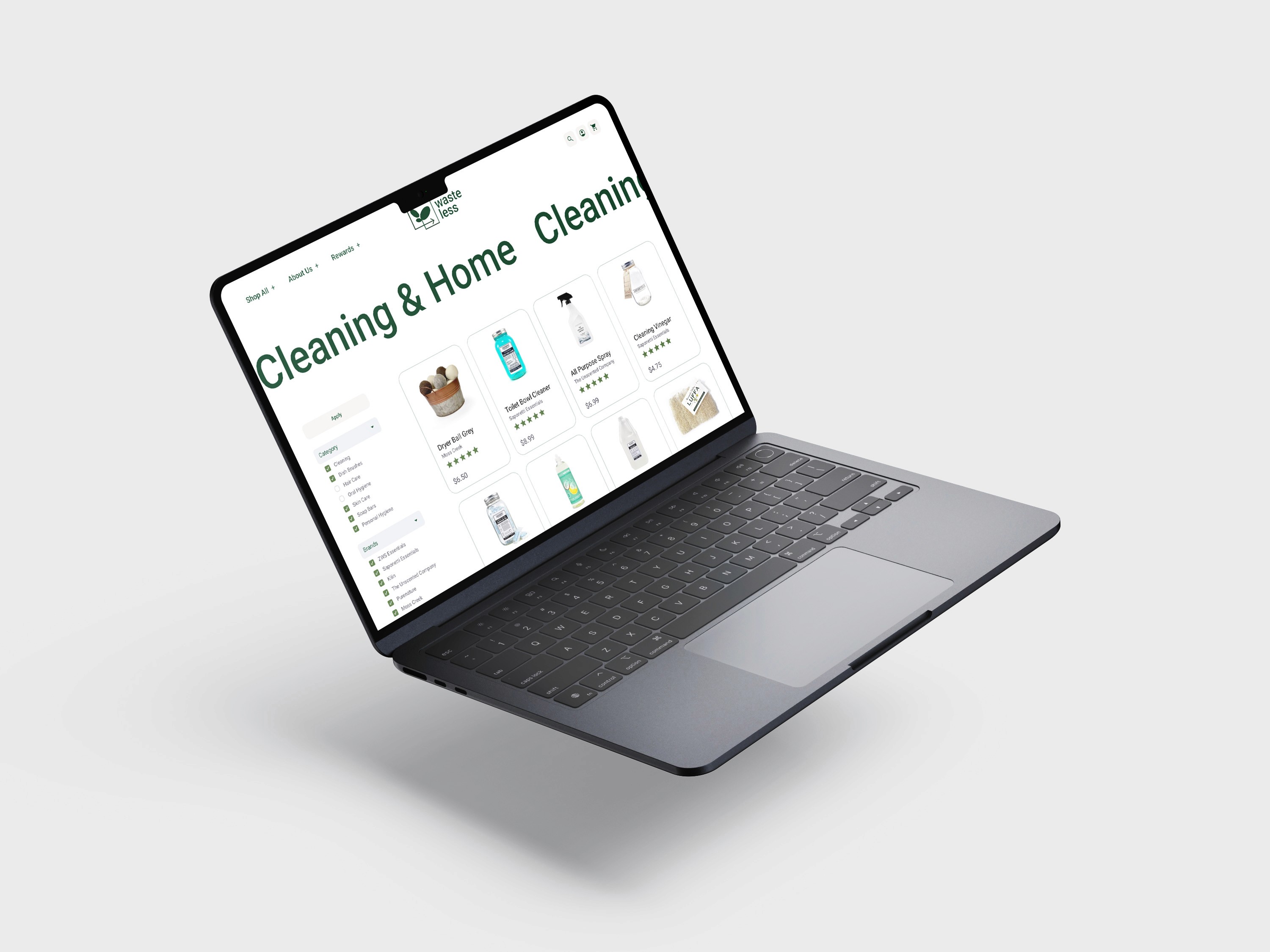
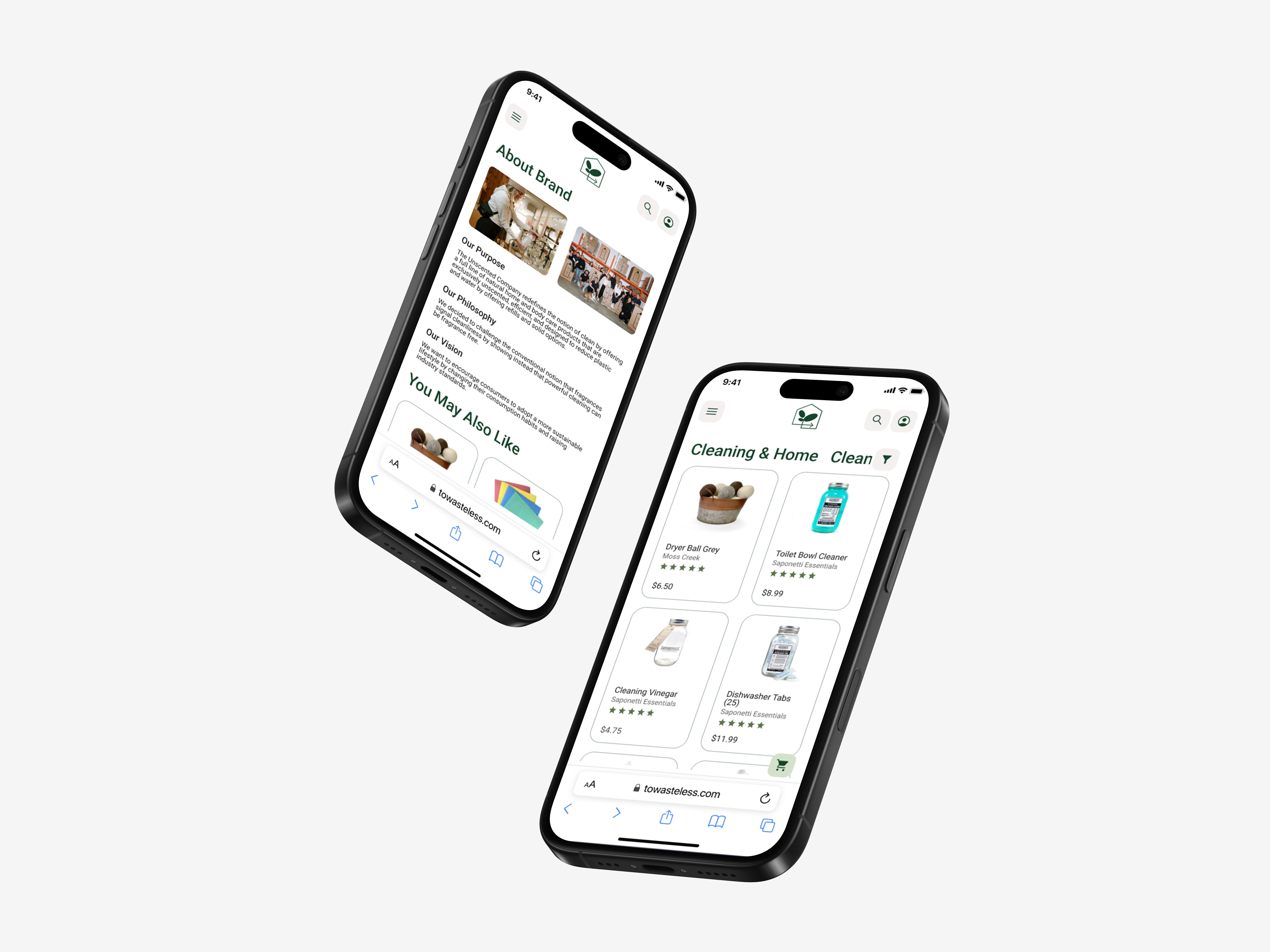
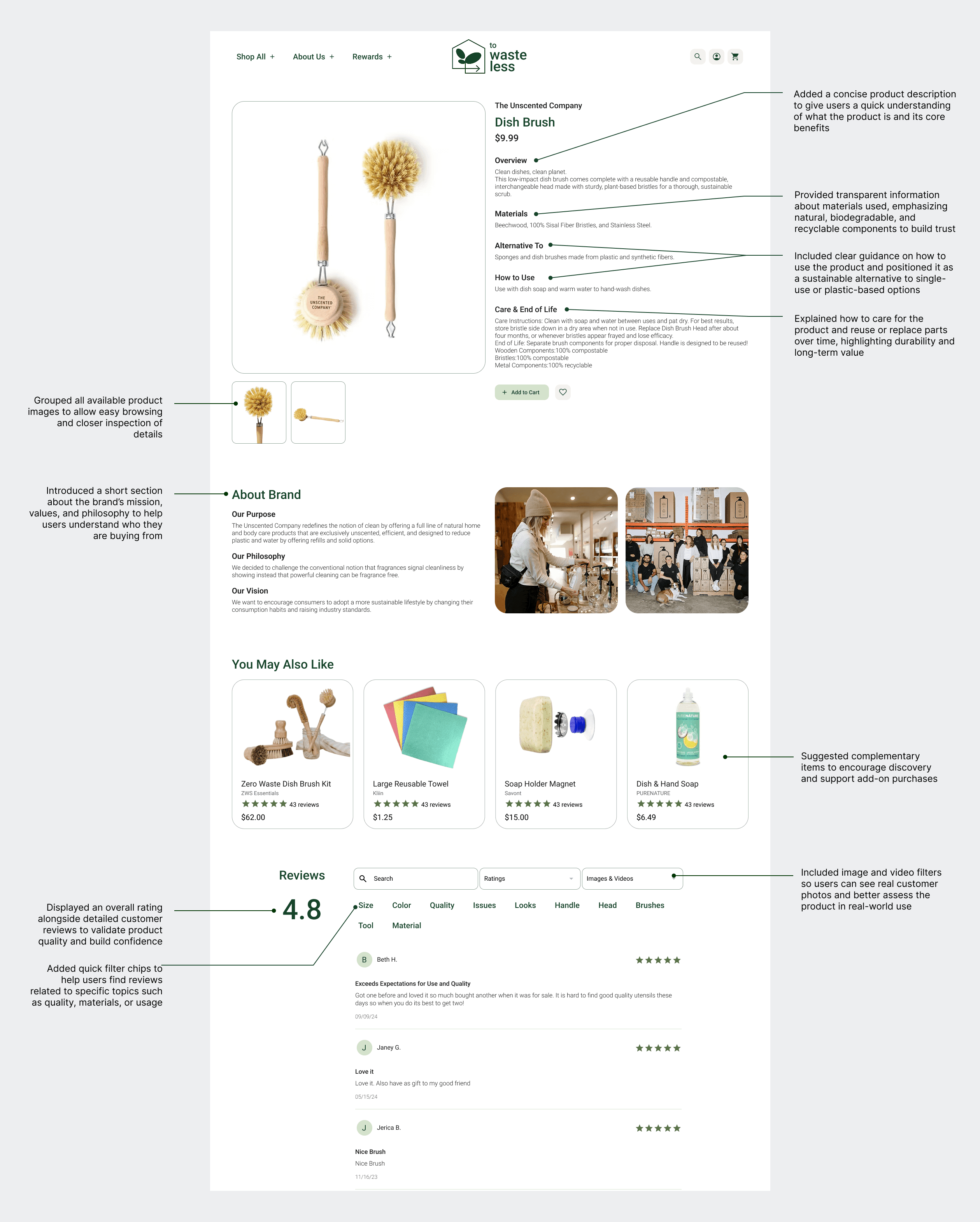
Building on wireframe testing and user feedback, I refined the To Waste Less platform in high fidelity, creating a minimal and interactive interface that helps users navigate the experience more intuitively. The final design improves product visibility, strengthens visual hierarchy, and clarifies product information, supporting confident decision-making throughout the shopping journey

Building on wireframe testing and user feedback, I refined the To Waste Less platform in high fidelity, creating a minimal and interactive interface that helps users navigate the experience more intuitively. The final design improves product visibility, strengthens visual hierarchy, and clarifies product information, supporting confident decision-making throughout the shopping journey

Key Features

Building on wireframe testing and user feedback, I refined the To Waste Less product experience in high fidelity to support intuitive navigation and confident decision making


Key Features:

  • Clear product overview with transparent materials, usage, and sustainability details.

  • Interactive product imagery to support exploration and comparison.

  • Brand storytelling and related product suggestions to build trust and encourage discovery.

  • Review summaries with filters and user images to validate quality through social proof

Building on wireframe testing and user feedback, I refined the To Waste Less product experience in high fidelity to support intuitive navigation and confident decision making


Key Features:

  • Clear product overview with transparent materials, usage, and sustainability details.

  • Interactive product imagery to support exploration and comparison.

  • Brand storytelling and related product suggestions to build trust and encourage discovery.

  • Review summaries with filters and user images to validate quality through social proof

Learning Insights

This project highlighted the importance of building trust in sustainable e commerce experiences, where users often question product quality, materials, and eco claims. Through this work, I learned that redesigning the brand position was as important as improving usability. A minimal and clear UI became a key tool to support the idea of intentional shopping, encouraging users to focus on buying fewer but higher quality products that align with a healthy and sustainable lifestyle. The project also reinforced the value of testing early low fidelity concepts to validate navigation and content hierarchy before moving into high fidelity design

This project highlighted the importance of building trust in sustainable e commerce experiences, where users often question product quality, materials, and eco claims. Through this work, I learned that redesigning the brand position was as important as improving usability. A minimal and clear UI became a key tool to support the idea of intentional shopping, encouraging users to focus on buying fewer but higher quality products that align with a healthy and sustainable lifestyle. The project also reinforced the value of testing early low fidelity concepts to validate navigation and content hierarchy before moving into high fidelity design

Next Steps

  • Conduct A B testing on product page layouts:
    Compare different content hierarchies and information density to determine which structure best supports user confidence and conversion


  • Expand sustainability education features:
    Introduce impact metrics or certifications to further validate eco claims and support informed purchasing decisions


  • Collaborate with developers and business stakeholders:
    Align interactive features and content strategy with technical feasibility and commercial goals


  • Measure and iterate post launch:
    Track engagement with product details, review filters, and related products to inform ongoing optimization

  • Conduct A B testing on product page layouts:
    Compare different content hierarchies and information density to determine which structure best supports user confidence and conversion


  • Expand sustainability education features:
    Introduce impact metrics or certifications to further validate eco claims and support informed purchasing decisions


  • Collaborate with developers and business stakeholders:
    Align interactive features and content strategy with technical feasibility and commercial goals


  • Measure and iterate post launch:
    Track engagement with product details, review filters, and related products to inform ongoing optimization