TD Bank - Currency Exchange Redesign
Scope of Work
User Research, UI Design, Wireframing, Usability Testing,
User Journey
Type of Project
Fintech, Mobile app
My Role
UX/UI Designer
Timeline
5 weeks
Overview
As part of an educational UX/UI project, I redesigned the currency exchange experience in the TD banking app. The goal was to modernize the interface, improve usability, and support increased revenue from currency conversions. By addressing key pain points such as an unclear entry point, confusing navigation, and non-transparent exchange terms, the redesigned flow became more intuitive and scalable. Usability testing showed task success improve from 33% to 67%, with more users able to independently complete currency exchange flows
Goals
Quickly perform currency-related actions without leaving the section, and receive accurate, up-to-date exchange rate information
Increase in revenue from currency conversions
Reduction in support inquiries
Problems
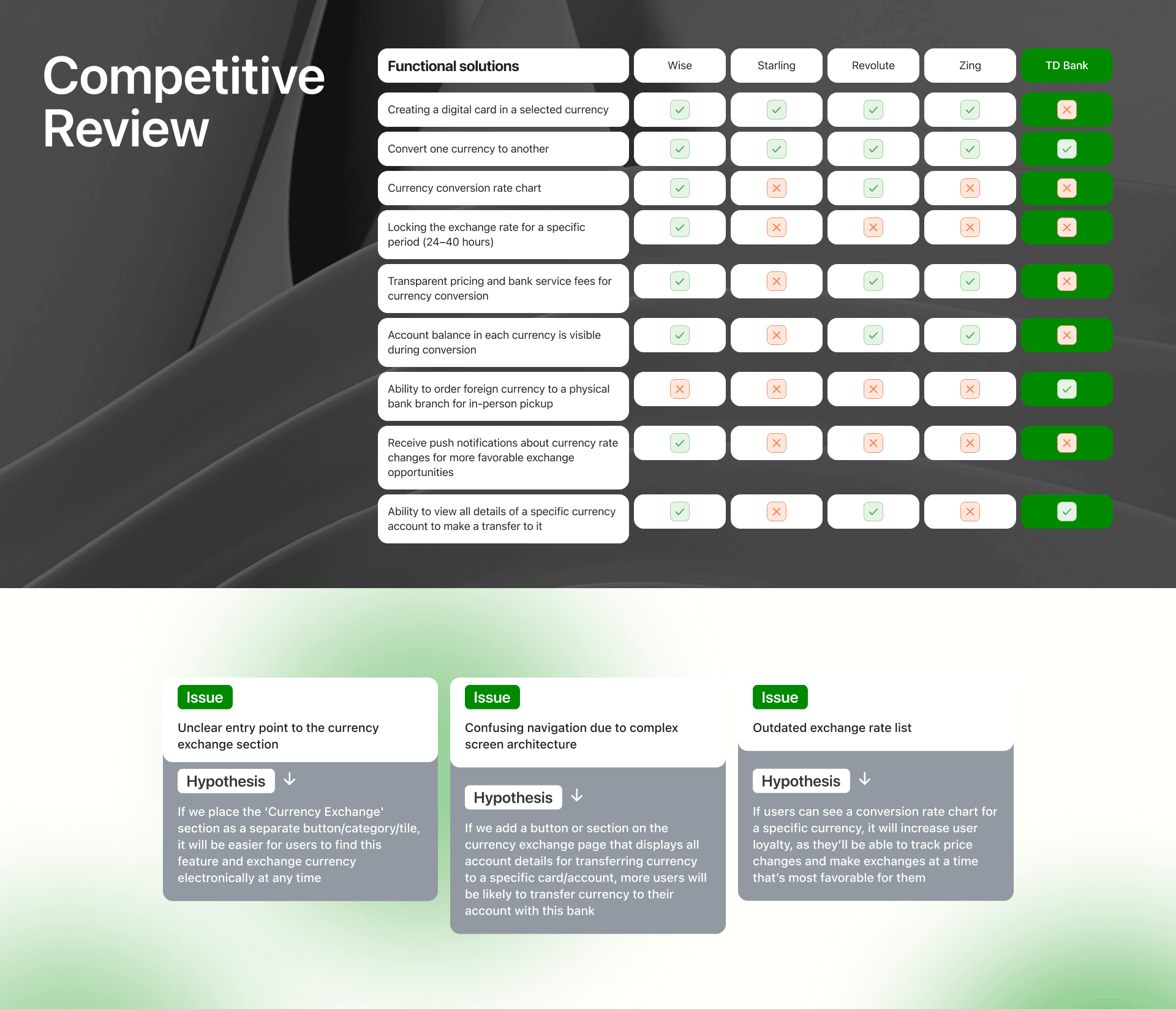
Unclear entry point to the currency exchange section
Confusing navigation due to complex screen architecture
Outdated exchange rate list
Design Process
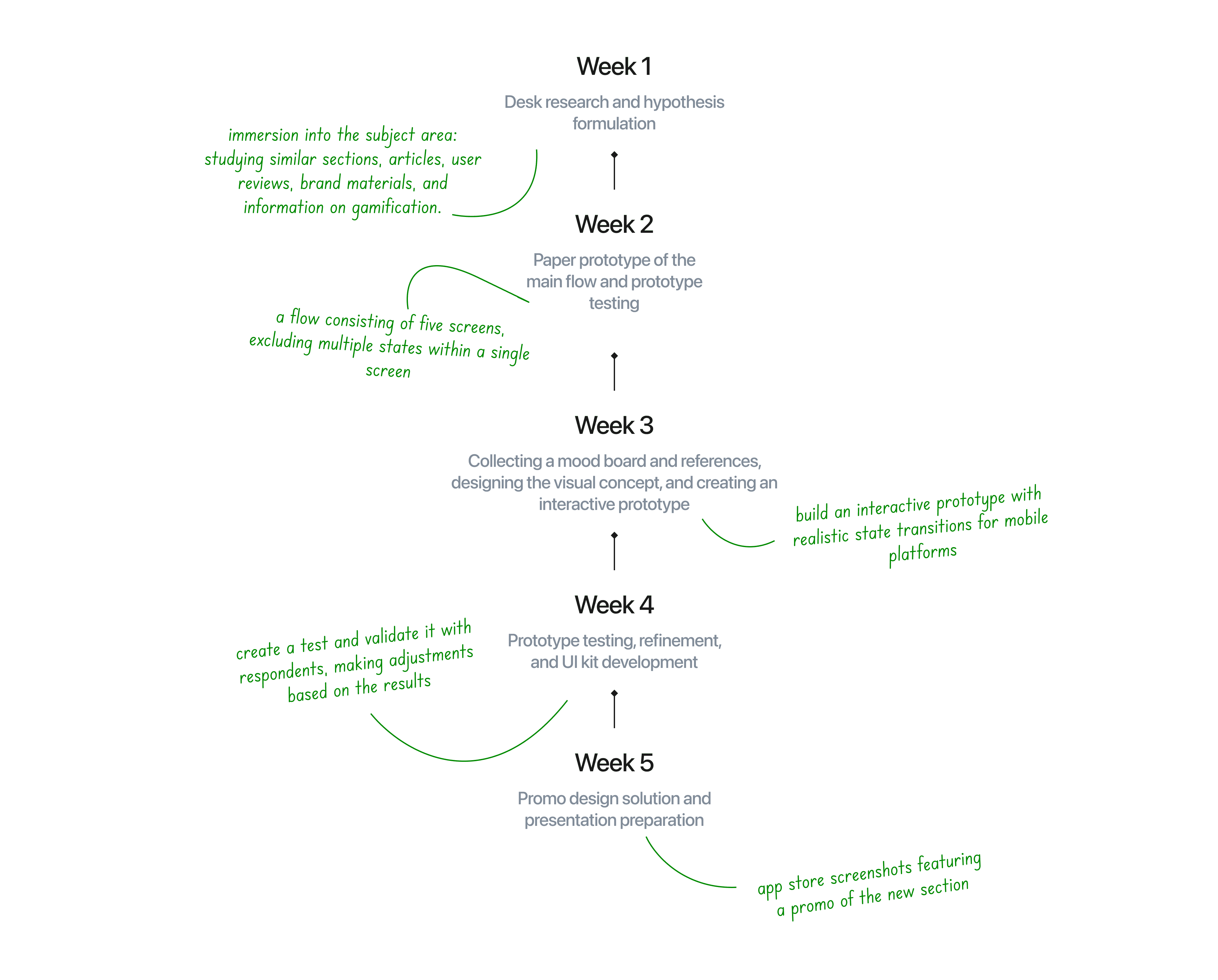
I interviewed users to identify usability gaps, observed how they navigated the app, and gathered insights on features that could better support their tasks. Based on these findings, I designed a clear, human-centered user flow with improved entry points and delivered a concise visual solution that modernized the experience while preserving TD’s brand
Research and Insights
At the start of the project, I analyzed leading currency exchange apps including Wise, Starling, Revolut, and Zing to understand industry standards, functional gaps, and best practices. I compared key features such as currency conversion, rate transparency, notifications, and account management to identify patterns and opportunities. This competitive analysis, combined with early user interviews and observation of in-app navigation, helped highlight usability gaps in the existing TD experience and informed the direction of the redesigned flow
User Interviews & Early Testing
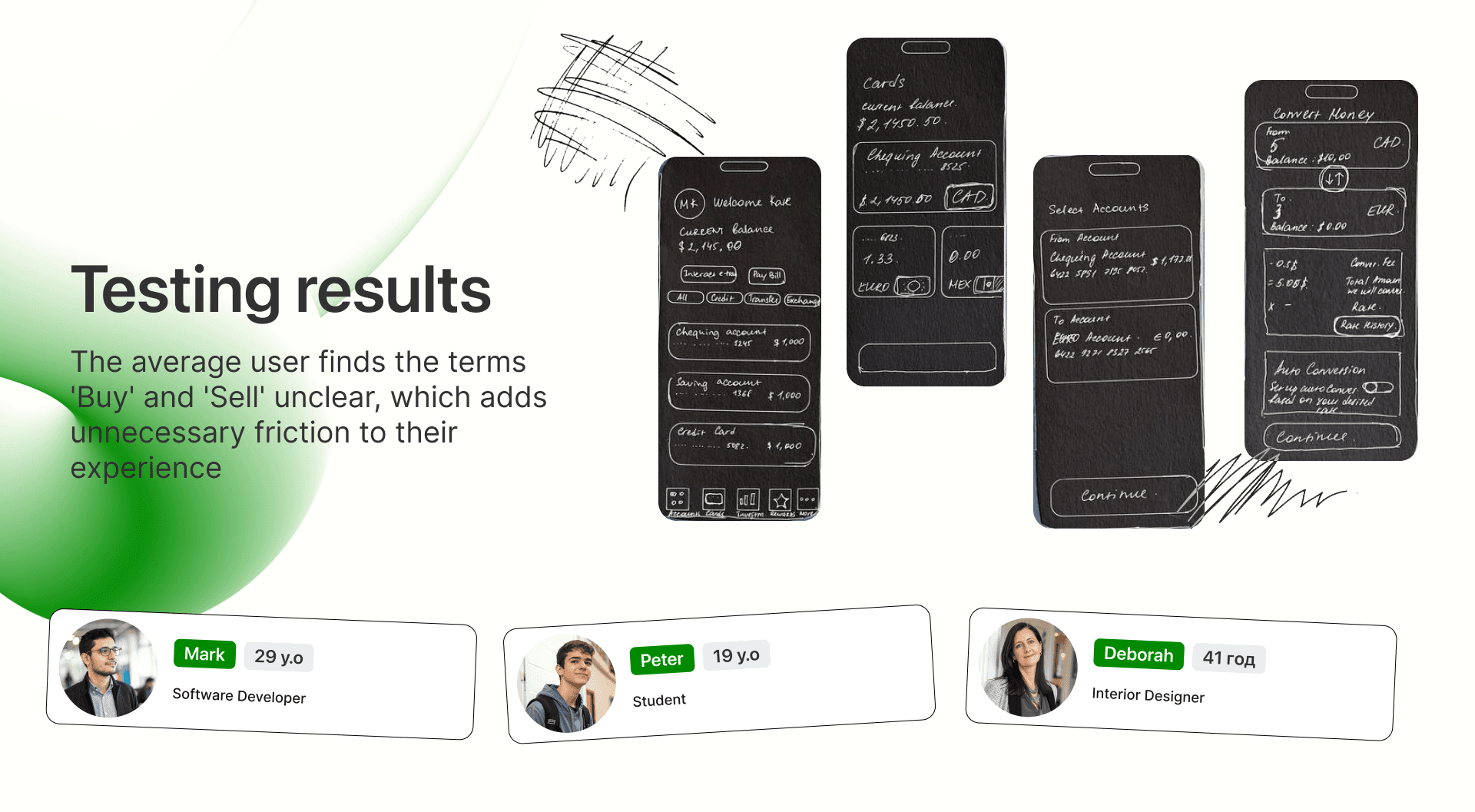
After synthesizing insights from user interviews, I defined three personas representing different ages and professions to ensure the currency exchange flow would work for a broad audience. Before moving into high-fidelity design, I explored these ideas through sketches and low-fidelity flows, testing how easily participants could understand and navigate the experience. This early validation helped shape the structure of the user flow before visual design

Outcomes
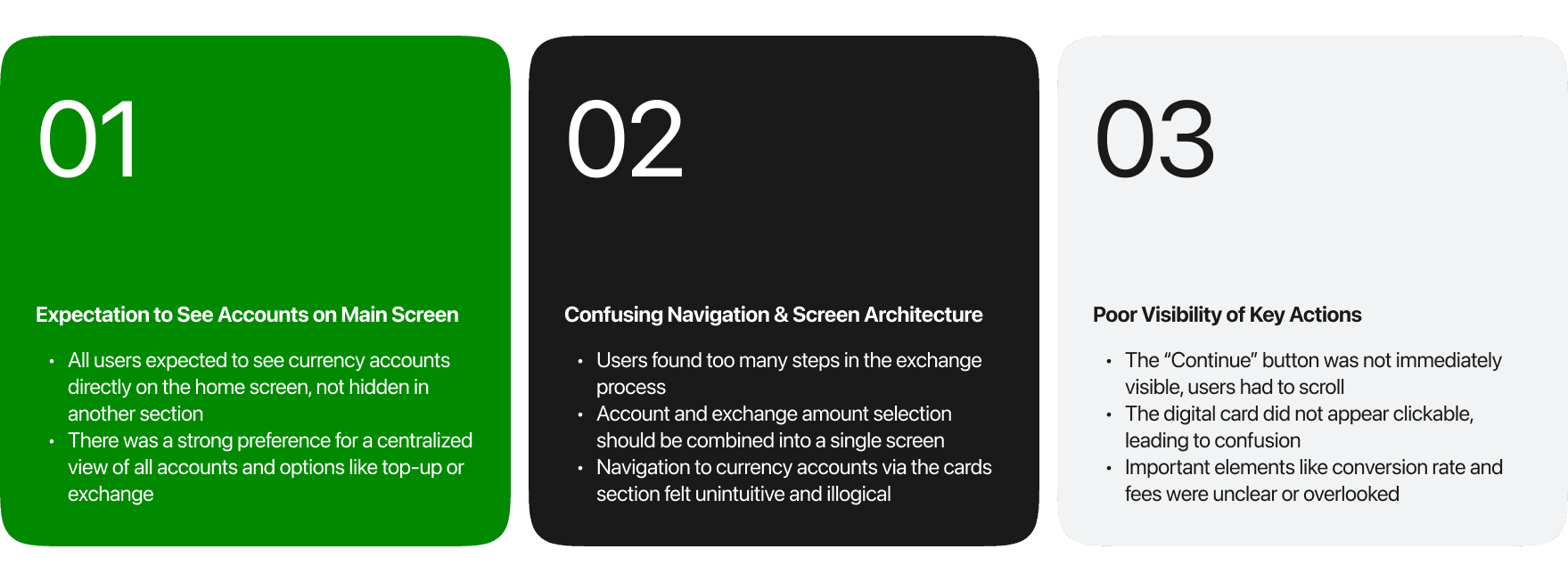
User interviews revealed strong expectations to access currency accounts directly from the main screen, with a preference for a centralized view of accounts and exchange actions. Participants struggled with the existing navigation, citing too many steps and an unclear screen structure during the exchange process. Key actions and information such as buttons, exchange rates, and fees were often overlooked due to poor visibility, leading to confusion and friction
Low-Fi Prototyping
Building on insights from user interviews and observation, I translated early sketches into low-fidelity wireframes that mapped the primary currency exchange flow from app entry to task completion

High-Fi Prototyping
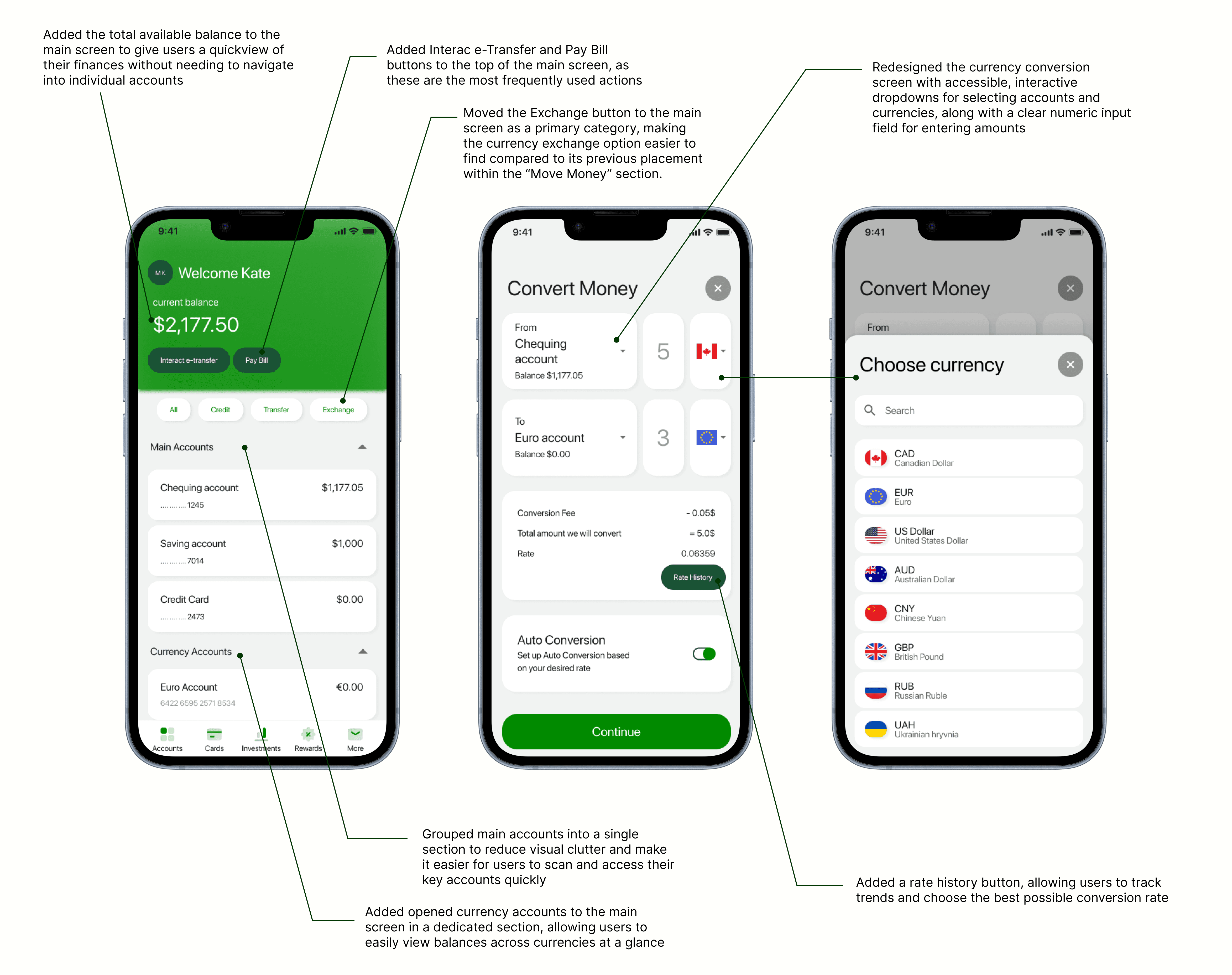
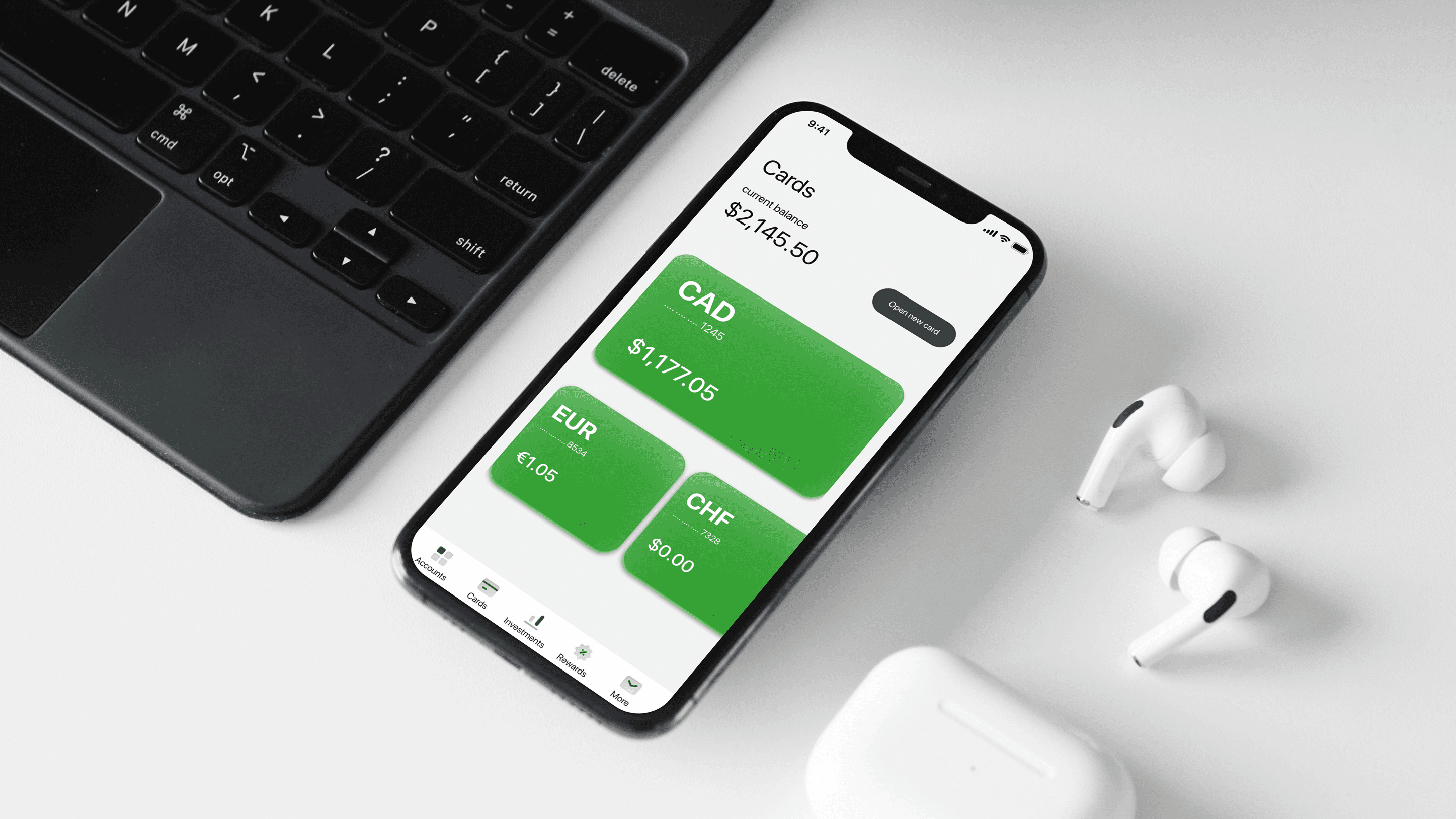
After validating early concepts through wireframes and testing, I refined the currency exchange experience in high fidelity, addressing key usability issues by bringing the Exchange action to the main screen as a primary category
Key Features:
At-a-glance financial overview with total balance, grouped main accounts, and visible currency account balances.
Prominent main-screen actions for Exchange, Interac e-Transfer, and Pay Bill to improve discoverability.
Simplified currency conversion flow with interactive account and currency selection, clear amount input, and transparent rates and fees.
Rate history access to help users monitor trends and choose optimal conversion timing.
Learning Insights
This project highlighted the challenges of redesigning a single feature within a large, established banking product. Without access to a public UI library, maintaining TD’s strong brand identity while introducing subtle modernization required careful balance. Most importantly, the work revealed that improving the currency exchange experience required rethinking the user flow from the main screen, not just the feature itself.
Next Steps
Explore A/B usability testing:
Test multiple UI variations for key interactions to understand what resonates most with users
Collaborate with stakeholders and developers:
Align information architecture changes with technical constraints and business goals
Refine visual design using internal systems:
Polish UI updates using TD’s design system while preserving established brand patterns
Measure and iterate post-launch:
Track conversion rates, task completion time, and support inquiries to guide further improvements