Nomada -
New perspective on travel

Nomada - New perspective on travel

Scope of Work

User Experience Research,
UI Design, Branding

User Experience Research,
UI Design, Branding

Type of Project

E-commerce, Web service

E-commerce, Web service

My Role

Product Designer

Product Designer

My Role

Product Designer

Product Designer

Overview

As part of an educational UX/UI project, I designed Nomada, a travel planning platform that helps users organize and book complete trips in one place. The goal was to simplify the fragmented travel planning process and reduce the cognitive load of switching between multiple tools. By addressing key pain points such as unclear itineraries, overwhelming options, and disconnected booking flows, the redesigned experience supports clear day by day planning and intuitive navigation. Usability testing showed task success improve from 40% to 75%, with users completing trip planning flows faster and reporting higher confidence in their final itineraries

As part of an educational UX/UI project, I designed Nomada, a travel planning platform that helps users organize and book complete trips in one place. The goal was to simplify the fragmented travel planning process and reduce the cognitive load of switching between multiple tools. By addressing key pain points such as unclear itineraries, overwhelming options, and disconnected booking flows, the redesigned experience supports clear day by day planning and intuitive navigation. Usability testing showed task success improve from 40% to 75%, with users completing trip planning flows faster and reporting higher confidence in their final itineraries

Goals

  • Enable users to book all paid trip components such as flights, accommodations, and attraction tickets within a single platform

  • Create a web service that allows users to set travel preferences and receive a personalized day by day itinerary

  • Design a modern, visually appealing identity that is easy to use and enjoyable to interact with

  • Build a brand that evokes excitement, energy, and a sense of discovery, making the travel experience memorable

  • Enable users to book all paid trip components such as flights, accommodations, and attraction tickets within a single platform

  • Create a web service that allows users to set travel preferences and receive a personalized day by day itinerary

  • Design a modern, visually appealing identity that is easy to use and enjoyable to interact with

  • Build a brand that evokes excitement, energy, and a sense of discovery, making the travel experience memorable

Problems

Planning a trip currently requires using multiple disconnected tools and platforms:


  • Flights are typically booked through services like Google Flights.

  • Attractions are researched using Google Search and Google Maps.

  • Accommodations are booked separately through platforms like Airbnb or Booking.com


Switching between these tools is time consuming and mentally exhausting, making trip planning stressful rather than enjoyable.

Planning a trip currently requires using multiple disconnected tools and platforms:

  • Flights are typically booked through services like Google Flights.

  • Attractions are researched using Google Search and Google Maps.

  • Accommodations are booked separately through platforms like Airbnb or Booking.com

Switching between these tools is time consuming and mentally exhausting, making trip planning stressful rather than enjoyable.

Primary User Research

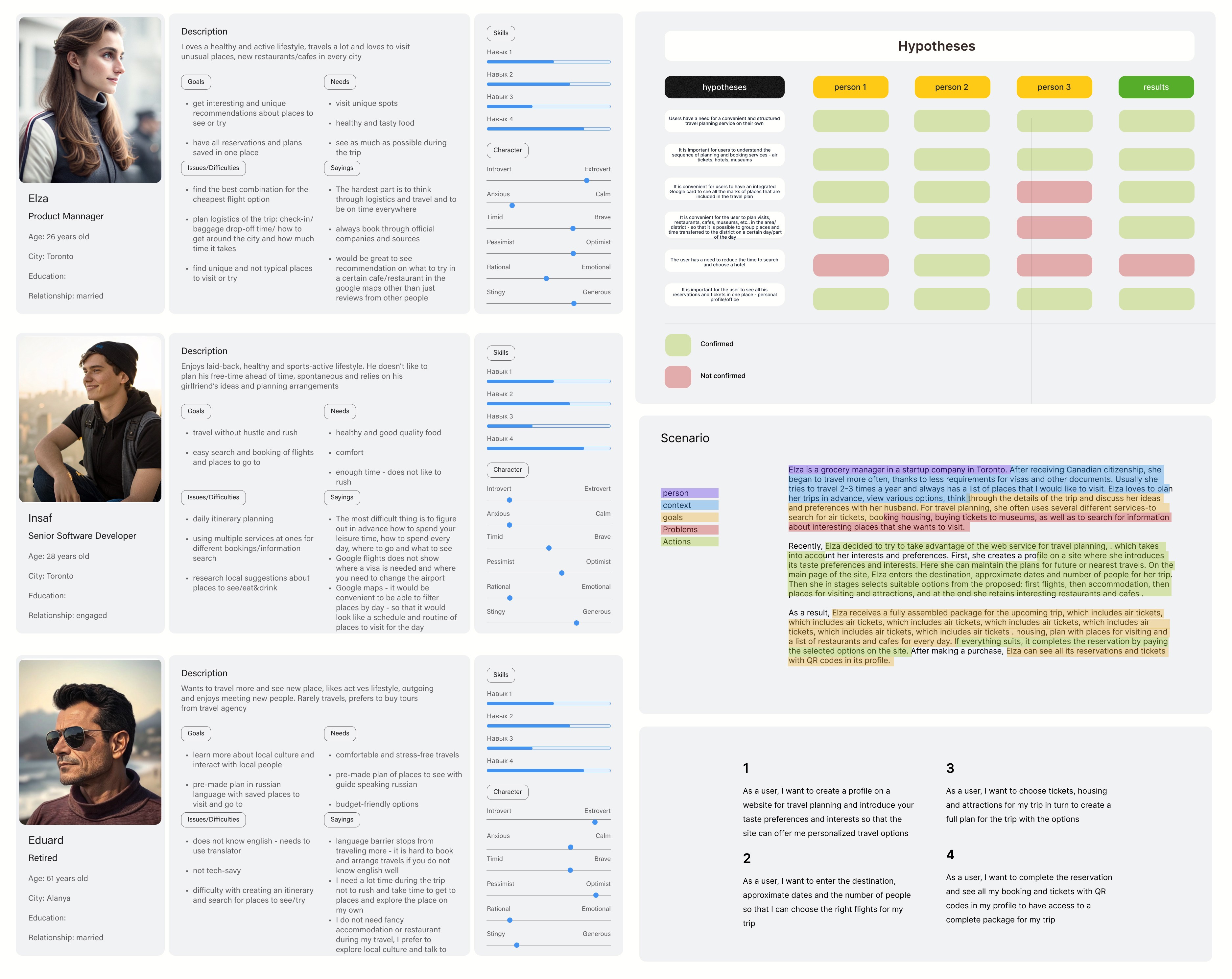
To understand different travel planning behaviors, I conducted interviews with three users aged 22 to 50 who regularly plan trips independently or through travel agencies. Each participant represented a distinct planning style: one highly structured planner who organizes every day by the hour, one flexible traveler who prefers to go with the flow and relies on reviews and recommendations, and one convenience-focused user who prefers purchasing complete travel packages through agencies. These interviews helped identify key differences in planning needs, decision-making styles, and pain points, informing the design of a flexible experience that supports multiple approaches to trip planning
To understand different travel planning behaviors, I conducted interviews with three users aged 22 to 50 who regularly plan trips independently or through travel agencies. Each participant represented a distinct planning style: one highly structured planner who organizes every day by the hour, one flexible traveler who prefers to go with the flow and relies on reviews and recommendations, and one convenience-focused user who prefers purchasing complete travel packages through agencies. These interviews helped identify key differences in planning needs, decision-making styles, and pain points, informing the design of a flexible experience that supports multiple approaches to trip planning
Task Flow

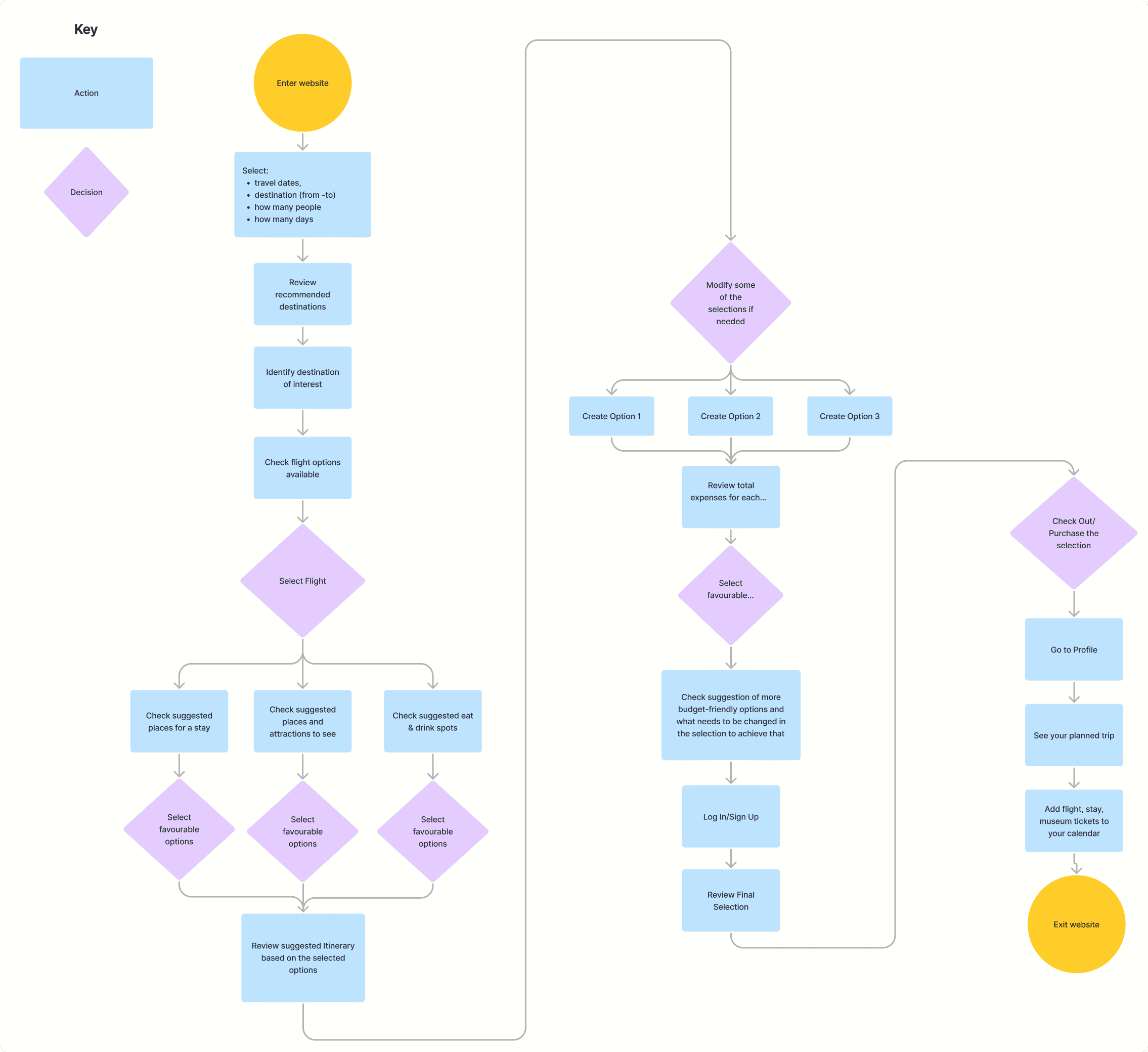
The task flow was designed to guide users through the end to end trip planning process in a clear and structured way, from entering travel preferences to reviewing and booking a complete itinerary. It supports different decision making styles by allowing users to explore suggested destinations, flights, accommodations, attractions, and dining options, compare multiple itinerary variations, and adjust selections based on budget or preferences. This flexible flow helps users move confidently from exploration to purchase while keeping the planning experience organized and intuitive

The task flow was designed to guide users through the end to end trip planning process in a clear and structured way, from entering travel preferences to reviewing and booking a complete itinerary. It supports different decision making styles by allowing users to explore suggested destinations, flights, accommodations, attractions, and dining options, compare multiple itinerary variations, and adjust selections based on budget or preferences. This flexible flow helps users move confidently from exploration to purchase while keeping the planning experience organized and intuitive

Final Design

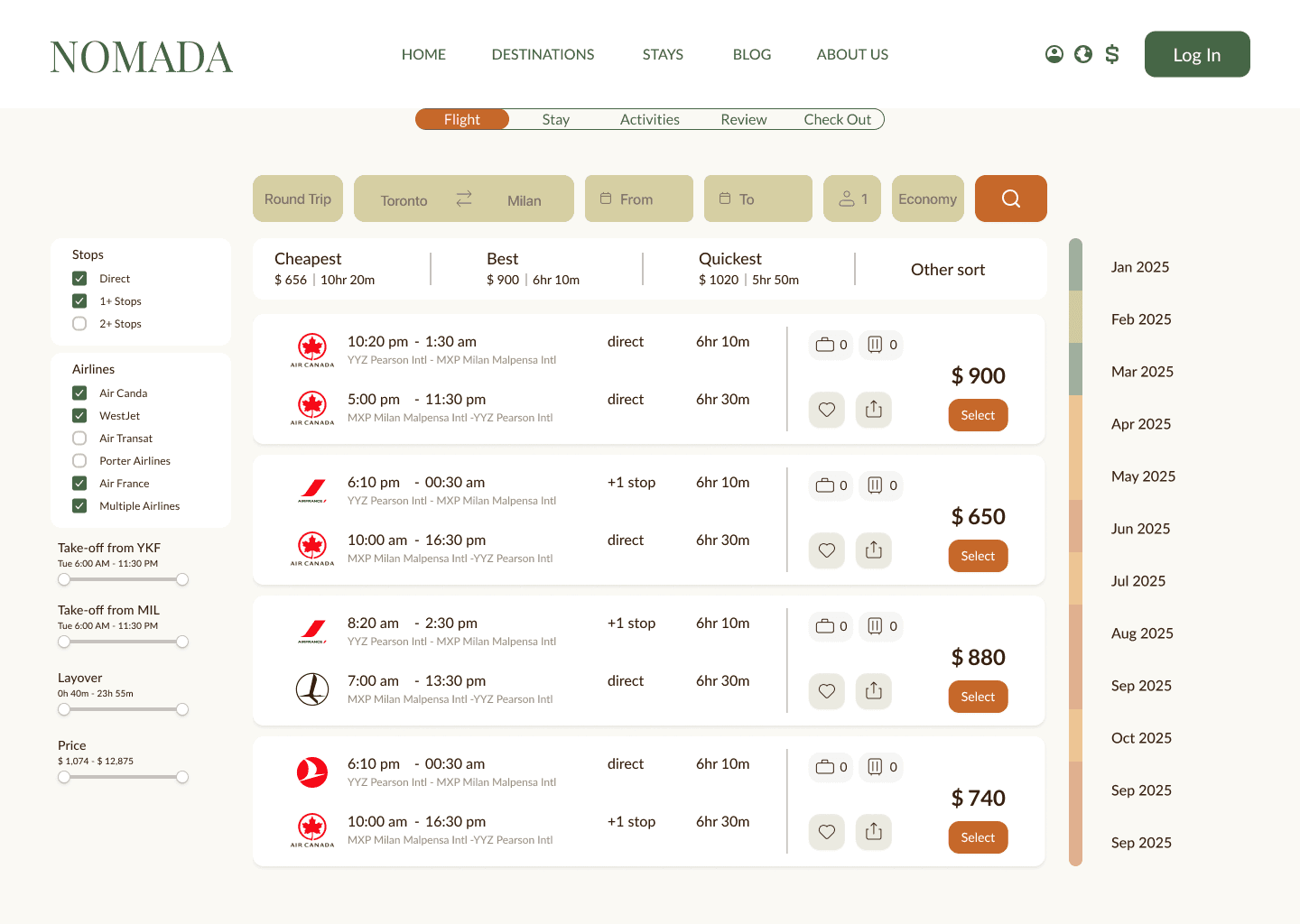
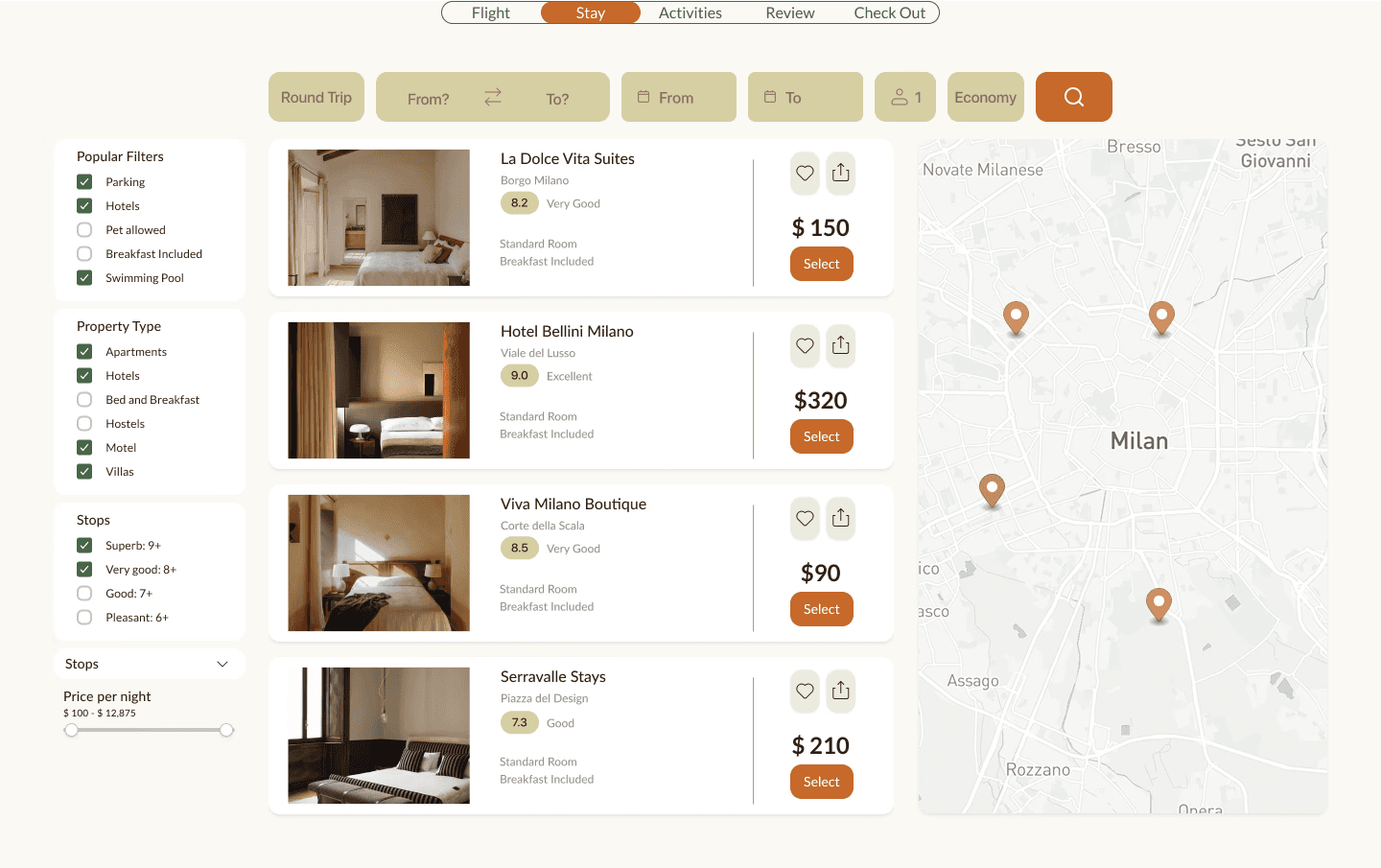
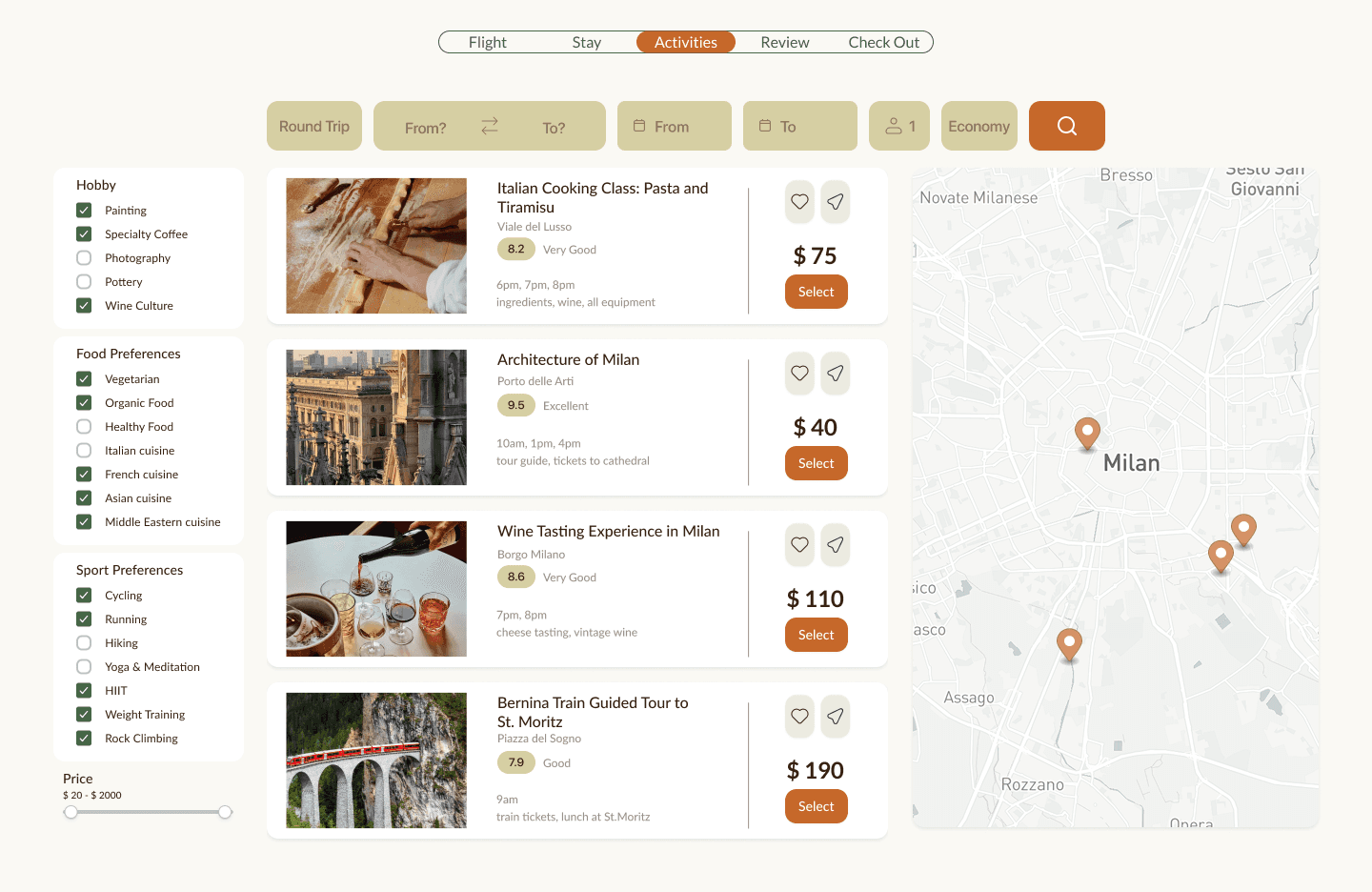
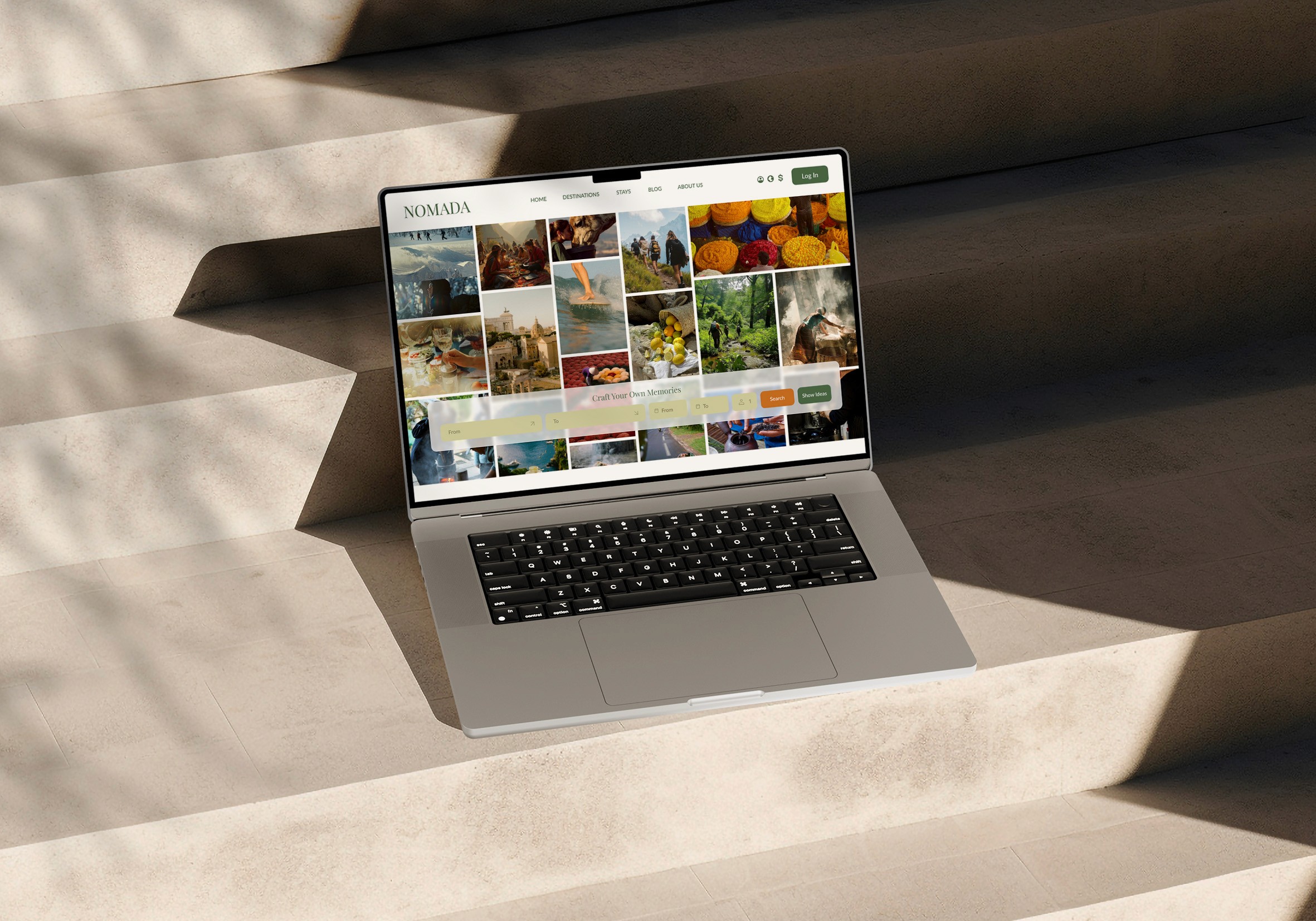
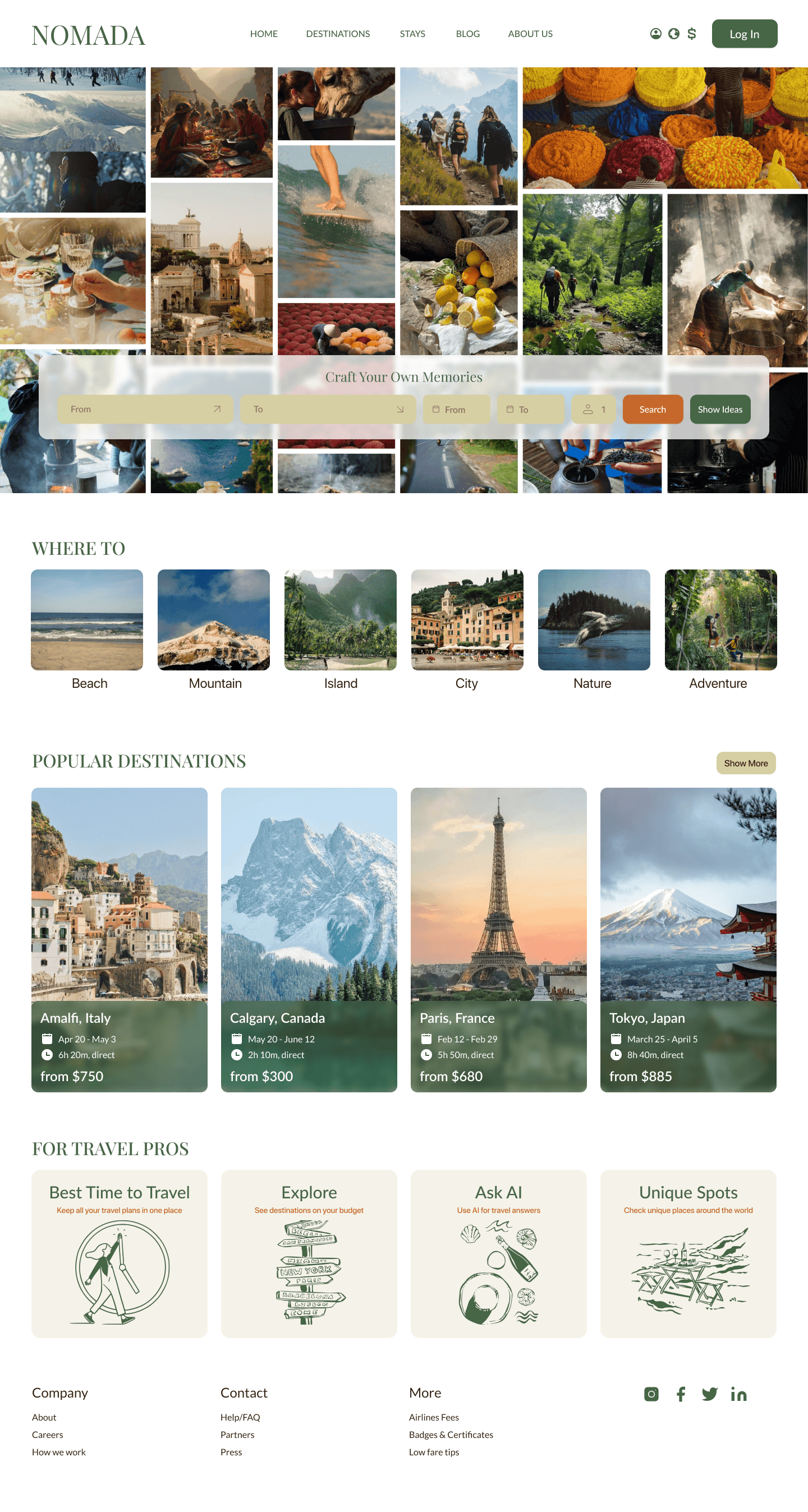
The final design delivers a modern, visually engaging travel planning experience that reflects Nomada’s brand identity as bold, adventurous, and easy to use. A clean and vibrant UI with purposeful typography, expressive color accents, and strong imagery evokes excitement for travel while maintaining clarity and simplicity. Thoughtful layout and intuitive interactions guide users from inspiration to booking, supporting both exploratory browsing and structured planning. The design balances aesthetic appeal with usability, reinforcing Nomada’s promise of effortless and memorable journeys in one unified platform

The final design delivers a modern, visually engaging travel planning experience that reflects Nomada’s brand identity as bold, adventurous, and easy to use. A clean and vibrant UI with purposeful typography, expressive color accents, and strong imagery evokes excitement for travel while maintaining clarity and simplicity. Thoughtful layout and intuitive interactions guide users from inspiration to booking, supporting both exploratory browsing and structured planning. The design balances aesthetic appeal with usability, reinforcing Nomada’s promise of effortless and memorable journeys in one unified platform

Learning Insights

This project highlighted how differently users approach travel planning and the importance of designing for flexibility rather than a single ideal flow. I learned that combining structure with freedom is key, allowing highly organized users to plan in detail while still supporting exploratory, low effort planning for more spontaneous travelers. The work also reinforced the value of strong visual branding in travel products, where inspiring imagery and clear UI play a critical role in motivating users while keeping complex decisions easy to manage

This project highlighted how differently users approach travel planning and the importance of designing for flexibility rather than a single ideal flow. I learned that combining structure with freedom is key, allowing highly organized users to plan in detail while still supporting exploratory, low effort planning for more spontaneous travelers. The work also reinforced the value of strong visual branding in travel products, where inspiring imagery and clear UI play a critical role in motivating users while keeping complex decisions easy to manage

Next Steps

  • Conduct usability testing with a larger and more diverse group of travelers to validate task flows and identify friction points


  • Explore personalization features such as saved preferences, budget ranges, and travel pace to better tailor itineraries to individual users


  • Collaborate with developers and business stakeholders to evaluate technical feasibility and booking partner integrations


  • Measure and iterate post launch by tracking task completion rates, itinerary adjustments, and booking conversion metrics.


  • Conduct usability testing with a larger and more diverse group of travelers to validate task flows and identify friction points


  • Explore personalization features such as saved preferences, budget ranges, and travel pace to better tailor itineraries to individual users


  • Collaborate with developers and business stakeholders to evaluate technical feasibility and booking partner integrations


  • Measure and iterate post launch by tracking task completion rates, itinerary adjustments, and booking conversion metrics


  • Conduct usability testing with a larger and more diverse group of travelers to validate task flows and identify friction points

  • Explore personalization features such as saved preferences, budget ranges, and travel pace to better tailor itineraries to individual users

  • Collaborate with developers and business stakeholders to evaluate technical feasibility and booking partner integrations

  • Measure and iterate post launch by tracking task completion rates, itinerary adjustments, and booking conversion metrics